Philanthropy Australia’s landmark new report Giving Together is the most comprehensive picture of collective giving ever assembled in this country. It offers the sector a national baseline, and with it comes a clearer answer to an important question: what does it actually take for collective giving to work, and to grow?
A Movement Comes of Age
Giving Together signals that collective giving in Australia has officially grown up. What was a collection of quiet, localised experiments a decade ago is now an established, vibrant force in Australia’s funding ecosystem. Across the 55 groups sampled, more than 11,000 people have directly participated, and together they have distributed $76.6 million between 1999 and 2025, including $9.3 million to over 300 organisations in their most recent grant-making rounds alone.
The Funding Network (TFN) has spent thirteen years building our model of collective giving, and it is genuinely exciting to see this kind of national evidence emerge. It confirms something we have felt anecdotally for a long time: this is no longer a fringe idea. It is a maturing and increasingly significant part of how Australians give.
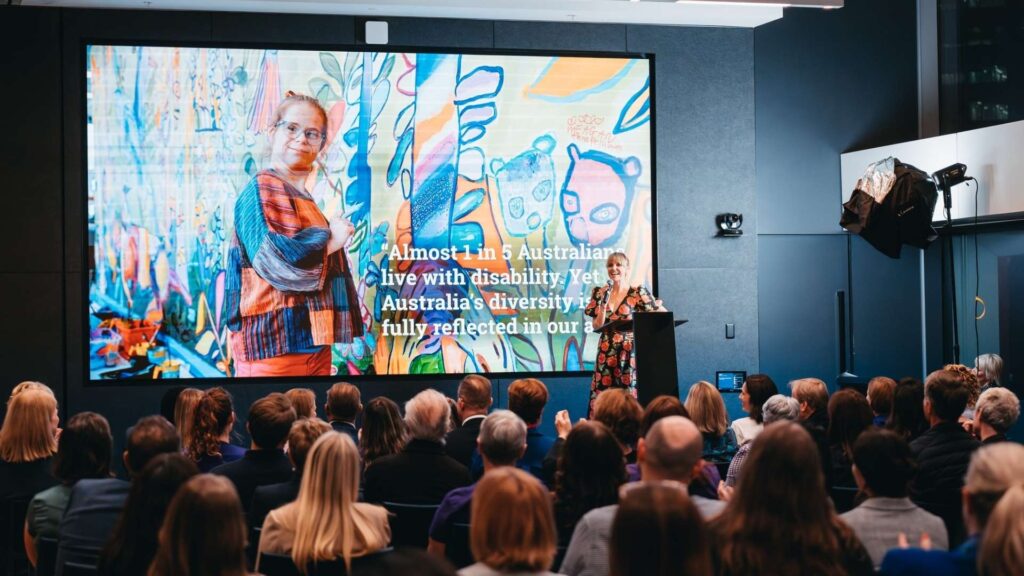
Lowering Barriers Brings More People Into Giving
One of the report’s clearest findings is that growth in collective giving still happens largely through trusted networks with 56% of participants first joining a group because someone they knew recommended it. That is a powerful, trust-filled way to grow. But the report also points to something else: attending an event is already the second most common pathway into collective giving, accounting for 25% of all introductions nationally.
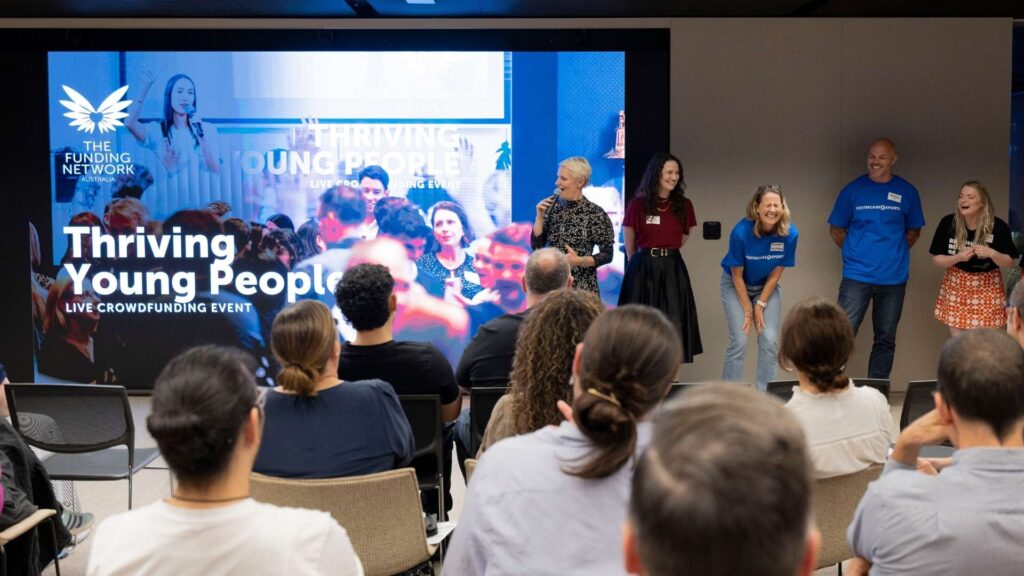
This finding resonates strongly with our own experience. Since 2013, TFN’s live crowdfunding model has been built around removing the barriers that typically stand between people and giving, with no membership fees, no annual financial commitment and no minimum entry threshold. Anyone can walk into a room, hear from three grassroots organisations, and decide in that moment what they want to give. The report’s own data on income and participation reinforces why this matters: flexible, low-barrier entry points open the door to donors, particularly younger or financially constrained donors, who might otherwise never see themselves as philanthropists.
Human Connection and Storytelling Remain Powerful
Giving Together finds that collective giving delivers benefits well beyond the dollars raised: 71% of participants say they feel they can make a difference, and 59% say they have fun while giving with others. Wellbeing, connection and shared purpose are not by-products of collective giving; they are central to why it works.
This is the heart of the live crowdfunding model. By putting the narrative first and centering the human story, it turns giving into a collective, emotional experience rather than a transaction. When a grassroots leader shares their vision directly with a room of people who are ready to act, the distance between community need and community response shrinks. It is a reminder that, however the sector evolves, the human connection at the centre of giving is not something to be engineered away in the name of scale. It is the thing that makes scale possible.
Professional Capability and Organisational Capacity Matter
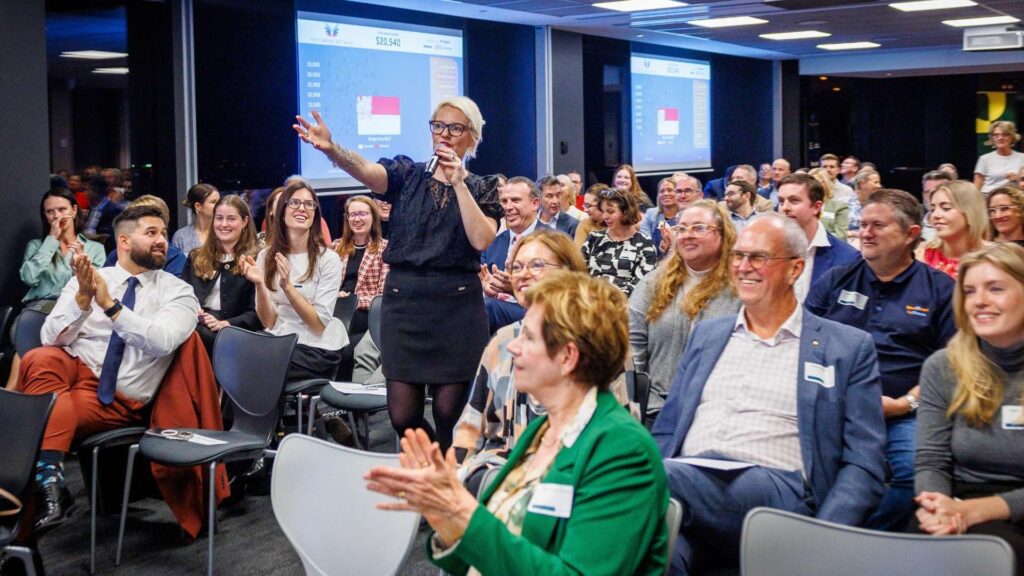
A recurring theme throughout the report is that realising the full potential of collective giving will take more than grassroots energy alone; it will require stronger organisational capacity. Our experience reflects this directly. TFN distributed $1.18 million in its most recent annual cycle, against a national median annual distribution of $94,000 across the groups surveyed, even though live crowdfunding represents just 13% of the operating models in the report’s sample.
We don’t read that gap as a reflection on any particular group or model. We read it as evidence for something the report itself argues: that investment in people, systems and long-term organisational capability compounds over time. From early on, TFN made a deliberate choice to invest in dedicated staff, technology and process rather than rely solely on volunteer effort. That investment is what has allowed us to run events at scale, sustain relationships with donors and grantees over years, and keep showing up for grassroots organisations long after the first grant is made.
“Collective giving is one of the most powerful ways to engage people in philanthropy, but movements don’t grow without infrastructure. Investing in the technology, talent and coordination that let groups operate sustainably is what allows them to focus on impact.” – Kristen Lark, CEO, The Funding Network
Grassroots Organisations Need More Than Funding
Perhaps the finding closest to TFN’s own mission is the report’s emphasis on trust-based, relationship-driven support for the organisations being funded, not just the capital itself.
Australia’s charity sector forms a steep, bottom-heavy pyramid. ACNC data shows the national landscape sits at 73% small, 16% medium and just 11% large organisations. For-purpose organisations typically enter our network at the very base of that pyramid. To pitch at a TFN event, an organisation must be grassroots, early-stage and operating with annual revenue under $1 million; an independent panel assesses every applicant on financials, operations and leadership before three are selected to take the stage.
Through our Alumni program, TFN stays connected to the organisations it funds, offering pitch and storytelling coaching, post-event mentoring, and access to pro bono corporate expertise. Today, 69% of TFN’s non-profit Alumni have grown into medium or large organisations, with 50% now reporting annual revenue exceeding $1 million, including 12% who have surpassed $3 million.
“TFN was pivotal for us. It was at a point where we’d gone from that young start-up idea to something that was gaining traction and momentum. It provided catalytic funding and validation that we were on the right track. The impact of this cannot be overstated.” – Samantha Payne, Co-founder and CEO of The Pink Elephants Support Network, pitched in 2020 and secured $106,000 of funding.
Sustainable growth is never down to funding alone. It reflects what Giving Together argues more broadly: that grassroots organisations thrive when support extends beyond the funding itself, into capability-building, connection and sustained relationship.
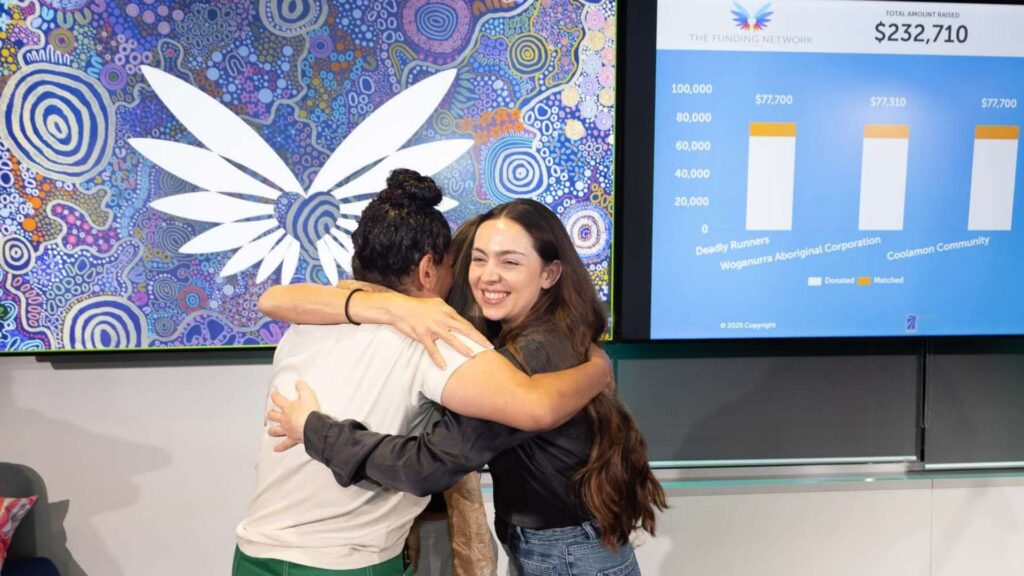
Giving Together gives the sector something genuinely valuable: a first, evidence-based picture of where collective giving in Australia stands, and what it will take for the movement to keep growing. It confirms what we’ve come to believe over thirteen years of running TFN: that lowering barriers brings more people into giving, that human connection remains at the centre of why people give collectively, that professional capability and long-term investment matter if we want real scale and impact, and that grassroots organisations need more than money to grow.