
3 December 2025
EQUITY & INCLUSION | BRISBANE, 2025
Hope is often the first intervention. Few understand that like Tahlia Isaac. A criminologist, and mother of two, she founded Project:herSELF in 2024 after her own incarceration and post-release experience showed how little dignity, planning and peer support women were offered on the way out. The programme uses a Release Planning Journal and small-group sessions facilitated by women with lived experience. Their stance is simple: justice begins with care.
“What drives us is that we are fully lived-experience led and staffed,” Tahlia says. “We are real, we are there, we have real stories. We can speak the language and connect on a faster, deeper level because we know what it is like to be in prison.” That credibility opens the door to agency in a place where almost nothing is self-directed. Inside, facilitators model possibility, guide women to map housing, health, work and relationships, and help them sketch the first small steps that make a release plan real.
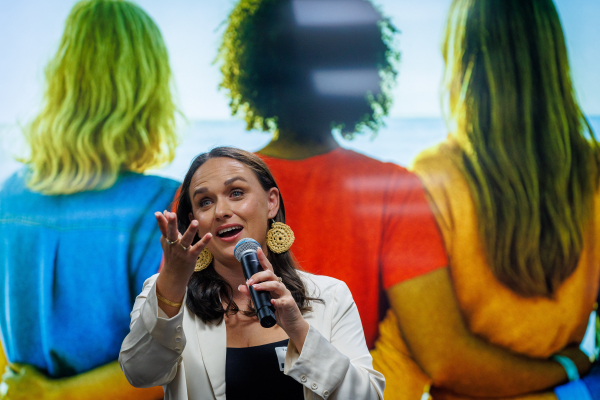
When Tahlia pitched at our Equity & Inclusion event in Brisbane, it was her first time pitching for any kind of funding. “I was really blown away that we were able to raise over $28,000,” she says. “The night was excellent, and it has been a game changer for us.” Before the pitch, Project:herSELF was working in two Queensland prisons. Today the release planning programme is approved in five of the state’s six women’s prisons, with applications in for four more peer workers, two in South-East Queensland and two in the North. Pro bono printing has covered a portion of journals, which means more of the TFN support can go to wages and delivery.
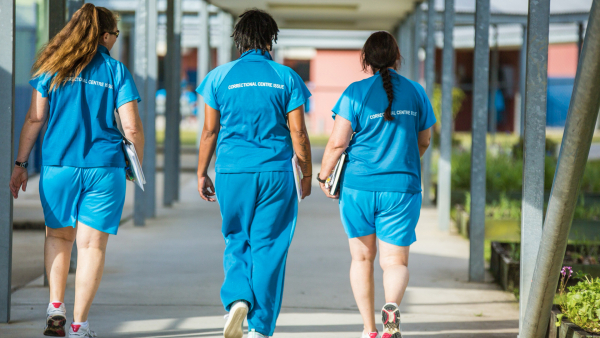
The change is visible one woman at a time. In one session a participant listened as Tahlia shared part of her story and began to cry. “She said she could not believe it was possible to get out and not come back.” She completed her plan, was released, and reached out. In the months since, she has found employment, engaged in therapy and stabilised in the community. Early post-release, the team looks for steady contact, safe accommodation, key appointments kept and whether a woman feels she is where she wants to be. The first weeks are often chaotic and the plan offers structure when the outside world does not.
Language is part of the work. “The word prisoner, the word criminal, inmate, those words can put an identity on somebody that makes it hard to see themselves in any other way,” Tahlia says. “When we speak about women in prison, they're women in prison. They're not girls. They're not prisoners. They're not inmates. They're women who are in prison.” That shift matters for the women themselves, for their families and for the community that will welcome them home.
Around 3,500 women are incarcerated nationally at a public cost of roughly $1.5 million per day, and most serve less than six months. That is long enough to destabilise housing, employment and family life, yet often too short to access consistent support. Project:herSELF meets that gap with dignity, structure and peers who have made the same walk and stayed out. The programme now reaches most women in Queensland’s custody, with peer workers expanding and plans that women write for themselves. Because release can mean a reset.